
- Home
- Contents
- Maps
- A Note to the Reader
- Preface
- Chapter 1: What Lies Beneath
- Chapter 2: Stewards of the Land
- Chapter 3: Arrival of the Uninvited
- Chapter 4: The Fur Trade
- Chapter 5: Of Whales and Whaling
- Chapter 6: Spreading the Gospel
- Chapter 7: The Names on the Cairn
- Chapter 8: More Settlers Arrive
- Chapter 9: This Perilous Coast
- Chapter 10: Amphitrite Point Lighthouse
- Chapter 11: Life-saving Boats and Coast Guard
- Chapter 12: Walking the Telegraph Lines
- Chapter 13: Boats, Planes and the Long-awaited Road
- Chapter 14: Japanese Canadians of the Coast
- Chapter 15: The War Years
- Chapter 16: All That Glitters
- Chapter 17: The Bounty of the Sea
- Chapter 18: Logging Heyday and “Nay Day”
- Chapter 19: Shopping on the West Coast
- Chapter 20: Answering the Call
- Chapter 21: Fun and Recreation
- Chapter 22: The Beckoning Beaches
- Chapter 23: Coastal Creativity
- Chapter 24: Tourism Then and Now
- Afterword
- Acknowledgements
- Notes
- Further Sources
- Image credits


Chapter 22: The Beckoning Beaches
Long Beach and Wreck Bay were sites of early Ucluelet outdoor recreation and picnic outings, a connection that continues today. Early settlers pre-empted land near Long Beach, and the beaches served as part of the route between Ucluelet and Tofino. For a more definitive history of the Long Beach area, I highly recommend
Long Beach Wild by Tofino author Adrienne Mason.
Long Beach
After the early settlement days, occasional vehicles arrived by boat or barge in Ucluelet, then were driven out to the beaches. The first “foreign” (US) car was driven along the beach by John Alexander in 1927. The first motorcycle, ridden by Tom Scales and J.R. Tindall of Vancouver in August 1939, got up to ninety miles an hour; they described the beach as “the finest speedway ever seen.”1
Littoral Leisure
When I was a teenager, drag racing on Long Beach was common. There were several accidents as cars raced along the beach or did doughnuts in the sand. I learned to drive on Long Beach before I was old enough to get a driver’s licence, but I didn’t break any speed records.
My earliest memories of Long Beach include feasting on crab cooked over an open fire after my dad raked them from pools with a long-handled rake; digging for razor clams; picking tiny wild strawberries (the most delicious of all strawberries); rolling down the sand dunes; and roasting marshmallows on bonfires. We grew up spoiled by the beautiful natural environment, just taking for granted that it was there to enjoy. After I got my driver’s licence, I spent countless hours of blissful solitude at Long Beach, walking barefoot in the hard-packed sand and breathing in the salty air, lulled by the roar of the surf.
It was natural that a site of such raw beauty would draw people not only to visit but to put down roots. Early residents who also provided tourist accommodation included Peg and Dick Whittington of Singing Sands cabin rentals, and Edgar and Evelyn Buckle, whose son Neil and his wife Marilyn later ran Combers Resort. Al Johnson, a fisherman and former violinist with the Vancouver Symphony, opened the appropriately named Fiddle-Inn restaurant along the highway. Al advertised it as the “finest in fish n’ fountain”—his abalone burgers were especially popular. Surfway Market was in the same area.
Abbott’s Resort, run by Archie and Frances Abbott and their daughter Caryl, included a store, post office, gas station, restaurant and guest cabins. I worked there briefly in the late 1960s, and was most excited about learning to make milkshakes, but Mr. Abbott’s main concern was that I keep my eyes peeled for shoplifters. I also recall beautiful peacocks wandering the property.
Jack and Norah Moraes moved to Long Beach in 1953 with sons Warren, Denis and Daryl. They set up their business, Long Beach Bungalows, adjacent to the Wickaninnish Lodge, and ran it for years, with many repeat customers, until selling it to Norah’s niece Doreen Myers. The Moraeses had a horse named Cree, who shared a lean-to near Lismer Beach with the Webbs’ horse, Punch. Cree was often found in the utility room at the back of the Moraeses’ bungalow and knew her way to the kitchen for snacks. The Moraeses later sold her to a family who lived up near the Lovekin family’s summer residence, and on occasion Cree would trot back down the beach to visit her original home at the Moraeses.
The Wickaninnish Inn
Like many others who grew up in the Ucluelet–Tofino area, I have fond memories of working at the original Wickaninnish Inn, a.k.a. the “Old Wick.” It has an interesting history. But before the “Old Wick,” there was the Wickaninnish Lodge.
In the late 1940s, Joe and Helen “Nellie” Webb moved from Duncan out to the west coast, where Joe became the local magistrate. They bought a huge tract of land, including over one and a half kilometres of waterfront, at the south end of Long Beach, and built some cabins. In 1952, Joe and Nellie purchased part of the old hospital building from the Tofino air force base and had it moved to Long Beach for their main lodge. Their three-star-designated rustic getaway had many return visitors. Nellie’s mother did much of the cooking, while Nellie gathered firewood and seaweed and brought it back to the lodge in a little cart pulled by her horse, Punch. (Seaweed remains a popular fertilizer for west coast gardens.)
Nellie drove an old Willys jeep around, and along Wickaninnish Beach. She was usually the first to scoop any glass balls driven in by big storms. The Webbs’ jeep wore a narrow tire-track route behind the rocky point where the Kwisitis Visitor Centre now stands, connecting to the road into Ucluelet. She met guests as they arrived at the wharf aboard the Uchuck and drove them back to the lodge. Helen Watts (née Stuart) often visited the Webbs with her family. “I can remember a very dark, rustic single-room hall constructed in the English hunting-lodge style. Multi-paned windows ran along each side and one end featured a large stone fireplace. Stuffed and mounted animal trophy heads graced the walls.”2
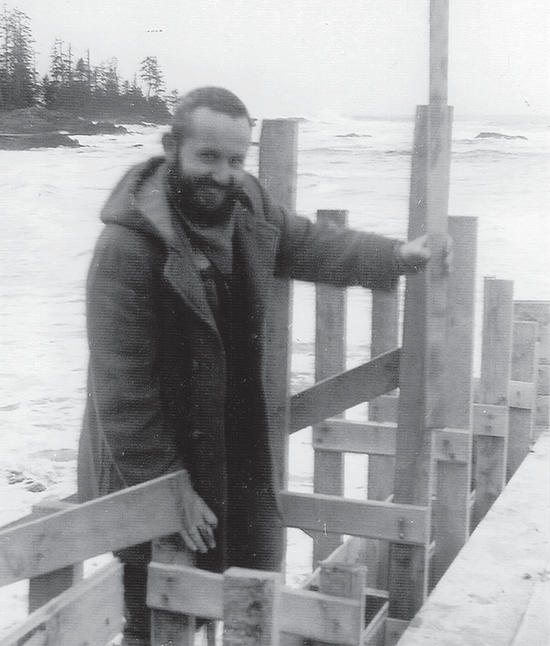
Joe Webb dreamed of expanding the lodge. In the late 1950s, Robin Fells entered the picture. Robin, who grew up in East London and had been a pilot for the RAF, fell in love with the western coast of the island on his first visit. A “man of vision,” Robin foresaw a bright future awaiting him.3 Robin became friends with Joe Webb, frequently visited Long Beach, and eventually bought the property and built the Wickaninnish Inn. He was able to make the purchase with no down payment, just paying monthly interest. “That was a gift from heaven,” he said.4
Robin envisioned a peaceful retreat where guests could feast on seafood, experience west coast recreation, and, if among “the very brave,” take time to simply think. He contacted direct descendants of Chief Wickaninnish to respectfully request the use of the Wickaninnish name for the inn. Permission was granted by members of the McCarthy family of Hitacu.
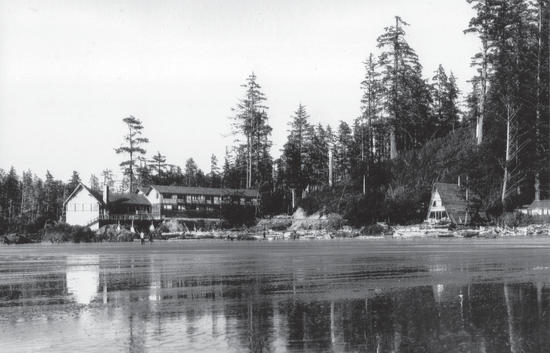
The doors of the Wickaninnish Inn officially opened July 4, 1964. Robin used marketing savvy and radio connections to promote the new inn. The advertising paid off and the inn was soon a popular tourist destination. Robin loved the lifestyle, bringing his kids up on the west coast and interacting with the guests and staff.
Seaside Servers
During my last years of high school in the late ’60s, I waitressed at the Wick. I don’t think anyone could have asked for a better employer than Robin Fells. He also had a great rapport with the guests. However, if the rare guest was demanding, Robin didn’t tolerate disrespect towards his employees. Starting out as a fifteen-year-old waitress, I found this both reassuring and empowering.
In response to an ad by a local business criticizing the youths of the day as lacking in responsibility and an awareness of “how to work,” Robin took out a full-page ad in the local paper: “The freshness, warmth, friendliness, courtesy and inherent responsibility of our young staff over the years has resulted in an international reputation for Wickaninnish Inn which we are very proud of.” He thanked all the staff from 1963 on, listed the names of the 1973 staff, “average age…19,” and concluded: “Congratulations younger generation!! For over 10 years you have demonstrated responsibility beyond that of many of my own generation. Keep it up—the future looks great.”5 No wonder we all loved working for Robin.
Working at the Wick was never boring. Sometimes, between serving breakfast and lunch, we would be sent to gather mussels for the chowder—guests got fresh seafood when they ate at the Wick. Even clearing and setting up tables between meals was never tedious, given the panoramic view. A perk for staff was the chance to surf in breaks (pun intended). One waitress recalled seeing Robin and Ralph Devries, one of the cooks, riding the waves with a killer whale following close behind. Ralph was an integral part of the Wick team, not only as a chef but as someone who helped build the Wick. He met his wife, Alice, while working there, and they raised a son and daughter on the west coast. Their son, Peter, became one of Canada’s top surfers.
We were well-paid, the tips were good, and the job was not demanding. I remember a massive ironing machine, which we fed the tablecloths through between breakfast and lunch, taking great care not to burn our fingers.
One of many perks was our waitressing attire. We were asked to give input regarding style and colour. The final choices made us all into ’60s fashionistas. Employees Joan Henderson and Jean Duckmanton sewed the creations, assisted by Val Jelly, girlfriend of chef Dale Fleming. For the morning shift we wore blindingly bright orange and yellow tie-dyed dresses. For the dinner shift we wore palazzo pants and long-sleeved, V-necked tunics in watery hues of blue and green. Robin let us keep the outfits, and the palazzo pant set was my go-to getup for parties through my university years.
Another perk was the food. In our breaks, we could order off the world-class menu, gratis. Ralph Devries would obligingly poach a perfect egg or flip some fluffy pancakes and hand them over with a smile and a quirky comment. Leverne Duckmanton and Dale Fleming served up ham steak with pineapple rings, or the delectable barbecued salmon. All this, plus I was getting paid. And the mussel chowder… Oh, the chowder.
Brochures advertised “no radios, no newspapers, no television, no telephones.” The Wickaninnish Inn provided a peaceful west coast experience with comfortable rooms and excellent food in a spectacular landscape. Between visitors and locals, the dining room was often hopping. In the summer months of the ’60s and early ’70s, over a hundred meals were served most nights, and not just to paying guests.
Lights, Camera, Action!
In the summer of 1971, Long Beach became the setting for a movie. Originally called Plastic Man and then renamed The Groundstar Conspiracy, it starred notable actors George Peppard, Michael Sarrazin and Christine Belford. Most of the cast and crew stayed at the Wickaninnish Inn. They started filming early each day, so we had to be at work at some ungodly hour, 4 or 5 a.m. The movie suffered from an identity crisis. It was marketed as sci-fi but leaned more towards the spy-thriller genre. I caught it on TV one night years later, when I had insomnia—it was slow going. But the actual filming created a buzz around Long Beach back then. Mike Mead-Miller was George Peppard’s stand-in, and some scenes were filmed in Jack and Phyllis Martin’s beach-front home. My most vivid memory of the filming period is of spilling coffee on Michael Sarrazin during one of his breaks—he was gracious about it. I was mortified.
In 1970, Robin received official notice of the establishment of a national park encompassing Long Beach and other western coast areas. He did not want to give up the Inn, and received a lot of support from locals as well as former guests. Thousands of letters protesting the Inn’s closure were sent to officials. Many articles were published on the topic, including one entitled “That Special Lodge in the Park,” in which writer Charles Oberdorf stated: “We have an embarrassment of mediocre hotels in the parks of this country. When someone’s finally put together a good one, doesn’t it deserve survival?”6
Pacific Rim National Park eventually gave Robin a five-year lease to run the Inn. However, things did not go smoothly, and Robin resigned the lease after one year, owing to the bureaucracy involved. Just one example is spelled out in a letter dated June 26, 1973, chastising Robin for being short by one cent in his May 1973 payment to the park: “Please be advised…the one cent difference will be adjusted at the final year end return. Please ensure that future calculations are taken to the nearest cent.”
Robin saw the writing on the wall, or the nitpicking in the letter, and finally gave up his beloved inn. Former employee John Allan took over the lease, along with two partners. At the end of 1977, the lease was not renewed. When John Allan protested, Park Superintendent Frank Camp explained there could be no exceptions: “If we let any private enterprise remain in the park after we removed so many others we’d have a lot of people down our necks.”7 The Inn was closed, leaving the once-bustling structure inhabited solely by caretaker Bill Billings. A former Shanghai policeman, Billings had first settled at Wreck Bay in 1939, in search of elusive gold. He would be the last resident of the Long Beach area.
The park finalized its plan to create an interpretive centre. Major sections of the Inn were dismantled and rebuilt to create the structure. The iconic bar, with its unique sway-back roof, was left standing and converted into a restaurant. Basically, one third of Robin’s original design remains.
Although the Kwisitis Visitor Centre is a well-used educational facility, many of us still mourn the loss of the original Wickaninnish Inn.
Wreck Bay
Wreck Bay’s name stems from the wreck of the Peruvian brigantine Florencia, which came to grief in this bay in December 1860. Captain Richards of HMS Hecate, named the nearby island Florencia Island in 1861.8 After 1930, Wreck Bay became known as Florencia Bay.9 Many long-time locals, including me, still call it Wreck Bay, but it is more commonly now called Florencia Bay, often shortened to “Flo.”
In the late 1960s, people looking for an alternative lifestyle arrived in droves. The majority of them were young, many of them disillusioned with the “establishment.” Labelled as hippies, beatniks, draft dodgers and flower children, they were said to be opting out of society’s mores. Some became full-time beach dwellers. Others were weekenders, here for a chance to get close to nature. Margaret Sinclair, who would soon become the wife of Canadian prime minister Pierre Trudeau, was one such visitor.
One newspaper article described the newcomers’ abodes poetically: “Driftwood shacks, like barnacles, cling to the shore.”10 Another article suggested the beach dwellers had “found their version of Paradise and Thoreau’s Walden Pond on the Pacific Ocean.” The reporter quoted a young man from Boston saying, as he traced a slow arc in the air with his finger, “I just watch the sun move from there to there. I forget about the time.” Another said, “Who needs drugs up here? I get stoned on the scenery.”11
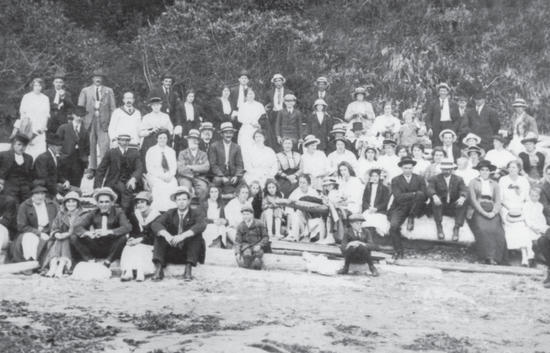
As in the Wreck Bay gold rush, the squatters left when torrential downpours and extreme winter tides set in. Only the hardiest stayed on through the winters, and numbers skyrocketed when milder weather returned.
Given the fluid nature of the visiting population, it is difficult to pin down numbers. Estimates vary widely. One report suggested that up to five hundred lived on the beach at times during peak summers.12 A newspaper article from 1970 referred back to an exaggerated 1969 report about “thousands of hirsute young people congregating in sin on Wreck Bay,” and went on to assert that “there were may-be 1,500 hippies at most.”13
In May and June of 1971, my mom’s friend Pat Hutchinson of Ucluelet took on the challenge of conducting the federal census at Wreck Bay. Luckily, Pat was an avid beachcomber, as her census-taking involved scrabbling over heaps of driftwood and balancing on a log across Lost Shoe Creek. Shelters constructed from logs, flotsam and jetsam stretched for three kilometres along the beach or back in the woods, some with privy holes, some without. One abode showcased a sign “The Ritz”; another proclaimed “No Vacancy.”
“To stroll past and talk to different ones here and there was a unique and interesting experience,” Pat wrote in a local history booklet, “but to try to count them with their daily comings and goings was a quite impossible chore.”14
Many were non-Canadian and so did not need to be documented. Many others refused to give surnames and addresses. Pat therefore had to settle for a ballpark figure, which the Vancouver census office deemed unacceptable. Wanting exact numbers, an official arrived on the coast. “He was taken to the clearing above Wreck Bay it was alleged, and said, ‘Well now, where are these uncountable residences your census worker referred to?’” A local representative gestured to the kilometres of log piles stretching into the distance along the beach below and stated: “There they are!”15
When the national park officially opened, these beach dwellers, like the residents of Long Beach, were told they had to leave. At a public meeting on June 8, 1971, many of the squatters protested their eviction, with (according to a newspaper account of the day) “their remarks well larded by four letter words not usually heard at a meeting.” The article adds that “a large number of hippie types kept leaving the meeting to gather around a beat-up panel truck and drink red wine from a gallon jug…Dozens of dogs, pets of the beach people, ran barking through the crowd, adding to the confusion.”16
When park superintendent George Trachuk mentioned that limited camping sites near Green Point were available for $1.50 a night, someone in the crowd moaned, “A dollar fifty a night! You can live a week on that!” Despite the crowd’s frustration, they did offer Trachuk a swig of wine, which he declined.
When the beach dwellers were offered up to fifty dollars to dismantle their abodes, many complied. In the fall of 1971, most of them were gone, and Tofino’s Ken Gibson and crew were contracted to dismantle and burn the remaining structures. Ken tried to minimize conflict by dealing with just one per day in any given area. He fulfilled his contract, acknowledging the creativity and inventiveness shown by many of the beach dwellers.17
The Moon Rock

As kids, one of our favourite traditions when we arrived at Wreck Bay was to run to the Moon Rock. This large, round rock sat on the beach at the north end of Wreck Bay. I don’t know who first christened it the Moon Rock, but given its pockmarked, cratered surface, the choice was a no-brainer. We would race to be the first to touch it, then run around it. We loved the Moon Rock. In the 1960s, the large sandstone ball disappeared from Wreck Bay. We felt like we’d been robbed.
Much discussion and speculation followed the Moon Rock’s removal. It was soon discovered that Jack Martin, who lived with his wife Phyllis at Wickaninnish Beach, had claimed the Moon Rock as his own. His friend Norm Winters, who lived just down the beach from Jack and Phyllis, had used his DC Cat to help Jack relocate the Moon Rock adjacent to the Martin abode, where it sat for many years.
The story didn’t end there. After Pacific Rim National Park took over, they placed the Moon Rock at their naturalists’ office for a short time, before moving it to a viewpoint overlooking Wreck Bay—not back home on the beach, but closer to its original site.
But wait, there’s more. Late one night in January 2009, after the park had closed for the day, someone (or several someones) broke the lock at the Wreck Bay entrance and stole the Moon Rock—no simple task. They transported it along the highway to Green Point, broke that lock to get through the gate, and dumped the Moon Rock over the bank. They left twenty dollars at the broken locks, supposedly to pay for new ones. Who the perpetrators were and why they did it remain a mystery. I am a traditionalist at heart. I wish the Moon Rock was still sitting on the beach at Wreck Bay.
Pacific Rim National Park
Given the extraordinary beauty of the Long Beach area, it is no surprise that the idea of preserving it as a park goes back many years. The Canadian National Parks Association supported the concept with a resolution in 1929.18 In 1931, several officials spent a few days assessing the area’s suitability. While they were impressed with the beaches, their strikes against the idea included lack of a safe place to put a wharf, the summer fog, frigid ocean temperatures and dangerous undertows—this last still a safety concern for swimmers and surfers in the Long Beach area. Some locals saw a need to protect the area, and Green Point was set aside in 1948.
Then, when the highway made the area more accessible, the ensuing mayhem affirmed the need to protect the beaches. Wickaninnish Provincial Park was established in 1962 with its Green Point Campground and some camping on the beach. This did not adequately protect the beaches from the incoming hordes. As visitors’ behaviours spiralled out of control, many locals advocated a federal park. One of the strongest proponents was Howie McDiarmid. A long-time local doctor, he became a Social Credit MLA and lobbied for the cause. He did not hold back in the legislature, describing in vivid detail the thousands of visitors camping at Long Beach on a July 1 weekend, “crammed cheek by jowl,” racing up and down the beach, and with “no water and two toilets for 7,000 people.”19
The provincial government saw the need, and in 1967 initiated a joint survey with the federal government to choose a west coast area filling the requirements for a national park. The area ranging from Long Beach down to Port San Juan showed great potential, and led to the proposal of a three-unit national park.
The process bogged down in red tape, as the provincial and federal governments bickered over details, including who would pay to acquire the land. Things sped up somewhat when Jean Chrétien was appointed minister of Indian Affairs and Northern Development. He came to check out the area in November 1968, liked what he saw, and got the ball rolling.
In March 1969, BC passed a West Coast National Park act, setting the scene for the establishment of a national park in three units: Long Beach, the Effingham Island Group (Broken Group), and the West Coast Trail from Bamfield to Port San Juan.20
The original agreement between the provincial and federal governments set boundaries for the Long Beach and Broken Group Island sections and outlined property acquisition methods. Pacific Rim National Park was the designated name, and on May 4, 1971, Princess Anne arrived to make it official with the unveiling of a commemorative plaque. George Trachuk guided the princess down a quiet, forested trail to the beach. As she stood on a newly built plywood platform covered with indoor-outdoor carpeting, the princess was briefly joined by an “impudent black and white mongrel,” which paused for a prolonged appearance on the stage with a “Hey, look at me!” expression. The princess grinned widely at being upstaged.
Jean Chrétien announced in both English and French that the park symbolized Canadians’ recognition of “the need for man to concern himself with a world beyond that of material gain.”21 A huge salmon barbecue was on offer, organized and overseen by Al Johnson, proprietor of the soon-to-be expropriated Fiddle Inn. Mrs. Mona Davison, helping with the barbecue, commented regarding the park that “we’re all happy it’s being preserved for everyone, not just for the rich and the big shots,” but added there were concerns about the development and planning of the park.22
Princess Anne chatted with people in the crowd, telling one of the beach squatters that she “could think of worse places to live.” My friend Liz LeGros’s father Art told a reporter, “Just because everyone here is smiling doesn’t mean we’re all happy.” He said that soon, owing to property expropriation, he would be out of both his home and his job as school bus driver.23
Princess Anne left her whirlwind visit “in a dramatic exit,” lifted off the beach by helicopter. The politicians packed up and left, the locals remained, and the adjustment period played out, fraught with concessions and complications.
A Transition Period
Many locals and regular visitors were relieved when the national park was established. Things had been getting out of control, with massive crowds taking over beloved beaches. Others were not convinced the new park would improve matters. Writer Dan Vepord expounded on his most recent visit to Long Beach. “The word about the Good Life out west has got around…There are tents, campers and lean-tos just a garbage toss apart. For miles and miles.” He went on to complain that “the hard tidal sand isn’t a beach. It’s a highway…[Canada’s] newest national park is strangling at birth.”24
Many people had feared that, as the area became more well-known, monster homes and businesses ranging from high-end hotels to hot dog stands would take over the beaches. In that sense, the park was a relief. But what came as a surprise to many was the expropriation and the deadlines to vacate. Many locals saw a need for grandfathering-in of existing residents and businesses, making the phasing-out long and gradual. The powers-to-be did not agree.
Long-time residents all had to go. Homes and businesses were dismantled, or in some cases moved to Ucluelet or Tofino. Several panabode cedar homes originally situated in the park still house Ucluelet residents. The A-frame from the Wick was moved to Willowbrae Road, and Robin Fells had to sell the Inn and property to the federal government. This included 223 acres, over one and a half kilometres of water frontage, the Inn, five cabins and a residence.
With the national park’s “back to nature” philosophy, even the iconic Lovekin house across from Long Beach was dismantled, despite a suggestion that the park use it for a much-needed life-saving base. The lack of lifeguards and a life-saving station remains a sore point, and the Lovekin house was in a prime spot, given the treacherous swimming and surfing conditions nearby. Locals also considered the charming 1936 Lovekin estate to be of historical value and were sad to see it go. Another affront was the destruction of the cabin where the beloved Group of Seven artist Arthur Lismer spent so many summers. Many felt it should have been preserved as a historic site.
This land had been under the stewardship of First Nations for millennia. The Tla-o-qui-aht people living on the Esowista Reserve, adjacent to Schooner Cove, naturally declined to leave. When they refused to trade their land within the newly drawn park boundaries and relocate to a different site, the park readjusted the boundaries. This involved going through the ATR (Additions to Reserve) process.
Esowista is situated on a beautiful site. As the population of the reserve increased, the Tla-o-qui-aht negotiated the acquisition of 86.4 hectares, where the new village site of Ty-Histanis was built, adjacent to Esowista. Moses Martin, a co-ordinator of the project, said that the name Ty-Histanis was suggested by an Elder: “His interpretation was that it was a place to anchor whales.” He added that “more recently we anchored our fishboats at night to get out of weather during the fishing season. Now today we hope it will be a place to anchor our people that want to come home.”25
As residents vacated the park, visitor numbers soared. The opening of the new twenty-four-kilometre section of the highway in 1972 made it more accessible to camper units and trailers. About 129,000 people visited the Long Beach unit of Pacific Rim National Park between May 1 and July 31 of that year. An average of over 500 units camped on the beach each night in July, an increase from the previous July’s average of 350 per night.26
Camping Fee Collector
I was home from university in the summer of 1972, working for the park, collecting camping fees from the hordes. I drove up and down the beach in a big orange Parks Canada truck, stopping to chat with people and collect their daily two-dollar fee. Many arranged to be “not be at home” at those times; some would flee down the beach or over the logs when they saw the truck coming. I also drove through the Green Point campsite, trying to collect fees. (There was no kiosk back then.) It was a hit-and-miss system. Often those I did manage to connect with argued that, as Canadian taxpayers, they shouldn’t be paying to camp. Some park visitors today take the same stance regarding parking.
We park employees frequently dealt with campers unfamiliar with the ocean, including those who parked next to the surf line at low tide, set up their tent beside their car, and went for a walk. I recall more than a few confused expressions when I explained that the tide would soon be coming in, their tents would be afloat, and they would likely lose their vehicles.
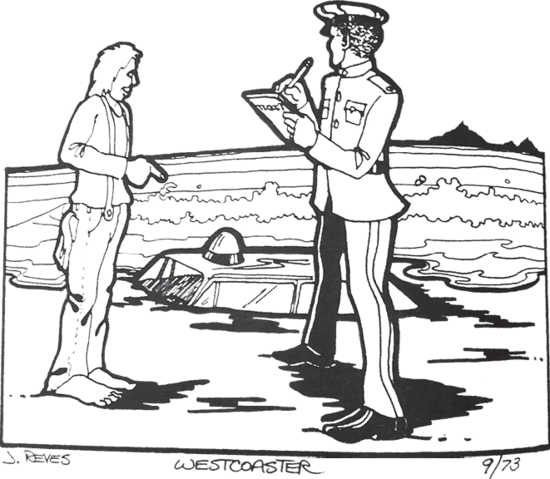
Incoming tides took many vehicles. We were not supposed to pull the stuck vehicles out, as the park trucks weren’t insured for that purpose. The best we could do was radio (before the day of cellphones) for a tow truck. Our lack of a more immediate response led, at times, to some colourful language directed our way. (Pre–national park, during the years that Neil Buckle lived at Combers, he towed over two hundred cars off the beach.)27
That summer job was a mixed blessing. The pay was good and the work included regular walks along the beach, a place I knew and loved. But the crowds were overwhelming. When I wasn’t working, I chose to avoid the park, seeking solitude at my favourite less-known beaches.
Tragedy on Radar Beach
Growing up on the west coast of Vancouver Island, I had always sought out rather than avoided the more deserted beaches. But in June 1972, an element of shock and fear spread throughout the area. Sometimes I did the fee collections alone and sometimes with another park employee, long-time Ucluelet local Julie Edwards. I always enjoyed working with Julie and was especially happy for her company that June day. When we arrived at work, we were warned to be on our guard, and to keep an eye out for a particular vehicle and its driver. A murder had taken place on isolated Radar Beach and the suspect was on the loose. We nervously did our rounds of the beaches and campground but saw nothing suspicious. The murderer was long gone. He would not be found for another thirty-seven years.
A young couple died on Radar Beach that June, shot in their sleeping bags. The suspect was a draft dodger. Described as a religious zealot (or “Jesus freak,” as some of the beach people worded it), Joseph Henry Burgess often went by the name of Job, ended many sentences with “Amen,” and expounded on “the wrath of God.” He was purportedly offended that the young couple were unmarried and killed them with a .22-calibre rifle. Burgess left behind one fingerprint, confirming his identity.
Placed on Canada’s most wanted list, Burgess disappeared for nearly four decades, before dying in 2009 in a shootout with two police deputies in the Jemez Mountains of New Mexico. Dubbed the “Cookie Bandit” because he’d been stealing food and supplies from cabins, the police caught him on a stakeout. During the gunfire, Burgess shot one of the deputies, who later succumbed to his wounds.
Vehicles Verboten
The hordes just kept on coming. On the May 24 weekend of 1973, an estimated ten thousand people, including two motorcycle gangs, camped on Long Beach. Cars were set alight (a practice sometimes referred to as a “carbecue”). The RCMP read the riot act, arresting eleven people. This out-of-control weekend cemented the decision of the Pacific Rim National Park officials to ban driving on the beaches, and to permit camping only in a small walk-in area at Schooner Cove. The response was mixed. Many locals and visitors were relieved there would no longer be vehicles roaring up and down the beach. Others deplored their loss of freedom.
Over time, as the land in the park returned to nature, most people adjusted. The new rule not to take anything from the park irritated some people. (“Disturbance and removal of natural objects is illegal in national Parks” is the official wording in a Pacific Rim National Park brochure.) Many locals missed the days of crabbing and clam-digging at Long Beach. I missed the beachcombing and thought nostalgically of all the lumber my dad and brothers had salvaged from Halfmoon Bay when a barge dumped it in a big storm. One lady from Tofino told me how a park employee accosted her husband as he was leaving the beach, demanding he hand over the glass ball he had just found. Her husband refused to give it up, citing the fact that one much-admired park employee owned the largest glass-ball collection in the region, and therefore he was not giving up his new-found treasure. (He also considered it unlikely that a glass ball fitted the park policy against removal of “natural objects.”)
Some people grumbled at having to pay for a parking pass, especially to walk on a beach they had enjoyed freely for many years. Others considered it a small price to pay for preserving the beloved area. Feathers were ruffled by the proposal of a toll gate at the park entrance. MP Ted Schellenberg lobbied successfully for a moratorium on such a gate, with support from Ucluelet and Tofino chambers of commerce and both municipal councils. He stressed that the gate would be both uneconomical and difficult to oversee, summarizing eloquently: “For whom does the gate toll, hopefully not for Pacific Rim National Park?”28
Pacific Rim National Park has been a boon to employment on the west coast. Park staff offer interpretive nature walks and presentations. The attractions of beautiful nature in a moderate climate continue to draw crowds.
Honouring the Nuu-chah-nulth
The Nuu-chah-nulth naturally had many concerns when the park was established. In 1971, C.D. Schultz of Vancouver did a $63,000 study assessing the effects of the park on the Nuu-chah-nulth and their reserve lands. Operations Manager Frank Camp said there would be further consultation between the Nuu-chah-nulth and the federal government.
Pacific Rim National Park has made it a priority to honour Nuu-chah-nulth history, traditions and culture. This is apparent on a visit to the Kwisitis Visitor Centre. “Kwisitis,” from the Nuu-chah-nulth language, means “other end of the beach.”
Barbara Touchie was a driving force behind the sharing of Nuu-chah-nulth culture in Pacific Rim National Park. She accomplished this during her twenty-five years with Parks Canada, and also after her retirement. In 2016, the theatre in the Kwisitis Centre was renamed to celebrate and honour her life and legacy; it is now called the Sičquuʔuƛ (Sitch–Khoo–ootl) Theatre. This is the pronunciation of her Nuu-chah-nulth name, and means “a dorsal fin coming around a point of land.” The knowledge Barbara shared can be seen in many places, including on interpretive signs along the Nuu-chah-nulth Trail, which runs from close to South Beach to the south end of Wreck Bay.
When cycling the ʔapsčiik t̓ašii (Ups-cheek ta-shee) path through the forests of the park, walking on Long Beach or Wreck Bay, or paddling the waters of Barkley Sound, I find time for reflection. Despite my nostalgia for years past, I am grateful these areas are preserved and protected as part of Pacific Rim National Park Reserve.