
- Home
- Contents
- Introduction: Kelowna’s Stories
- Chapter One: Before Kelowna
- Chapter Two: Discovering the Okanagan
- Chapter Three: Kelowna Flourishes, 1905–1930
- Chapter Four: And We Thought We Would Be Spared, 1930–1940
- Chapter Five: Despair and Recovery, 1940–1955
- Chapter Six: Kelowna Grows Up—The Tumultuous Years, 1955–1975
- Chapter Seven: The Past Thirty-five Years—Kelowna Finds Its Heart, 1976 to the Present
- Afterword: Kelowna 2024
- A Timeline for Kelowna
- Sources
- Acknowledgements
- About the Author


Okanagan Tobacco Crop
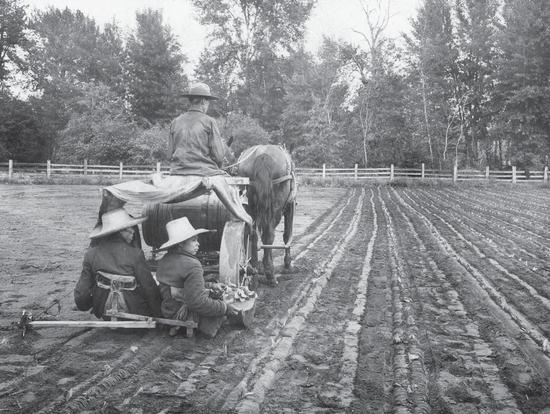
When railroad construction was over, many Chinese men settled in Kelowna and found employment in the tobacco and lumber industries. They also grew vegetables, which they sold door to door from baskets balanced on poles across their shoulders. The top left photo shows the planting of new tobacco plants.
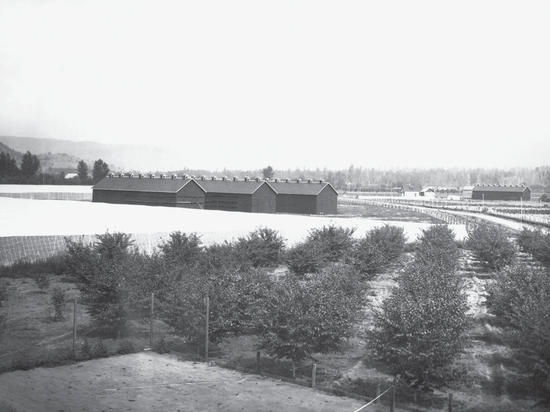
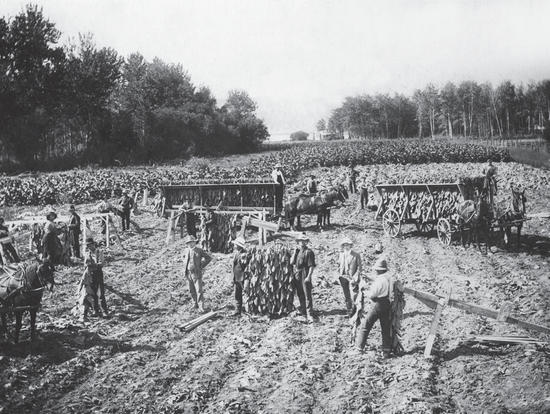
Green tobacco leaves were hung on stakes and collected in the field, and then secured to horse-drawn drying racks as shown in the top right photo. Tobacco leaves dried in the barns that dotted the landscape while small plants were grown under muslin (in the foreground, bottom left photo) to protect them from intense sunshine.
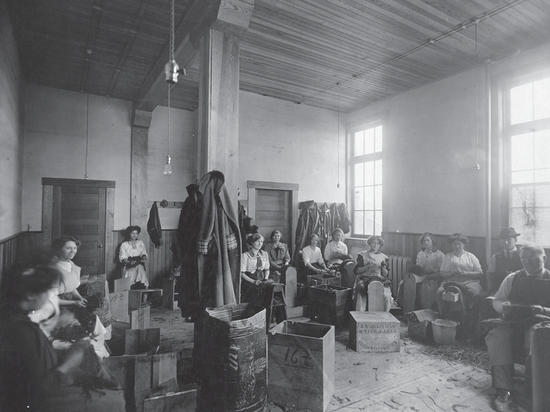
Tobacco was once one of the Okanagan’s most promising crops. Cigars rolled and packaged in Kelowna (bottom right photo) and sold as “Kelowna Specials” or “Flor de Kelowna,” along with cut tobacco, were sent to miners working the flourishing Kootenay mines. In the hope of developing a wider market, samples were featured at agricultural exhibitions overseas. It has been suggested that more people lost money investing in the Okanagan tobacco crop than through any other agricultural venture. | Kelowna Public Archives 5746, 1365, 2170, 122