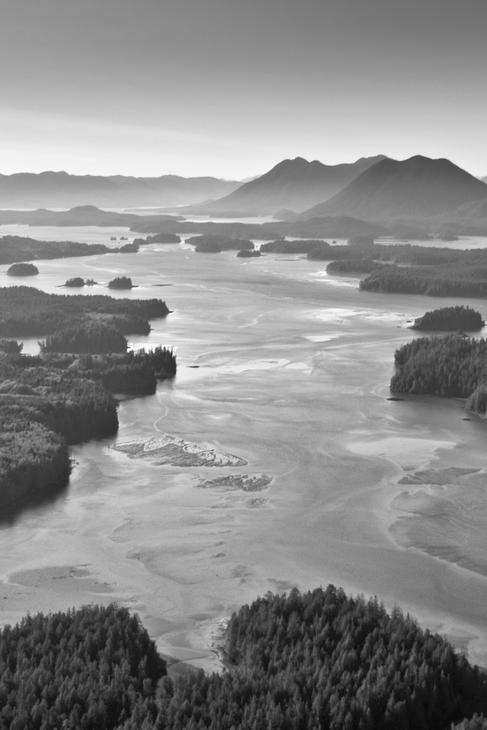
Magical, and symbolically laden with history, its forests still standing, its mountains and rugged coasts facing across the waters to today’s Tofino, British Columbia, Canada, Meares Island lies...
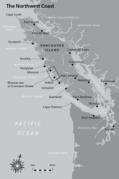
Maps and Charts
...
Preface
One day in early 1986, I received a phone call from a British Columbia lawyer, Jack Woodward. Our discussion was cordial and, after customary pleasantries by way of introduction, yielded from him...
Introduction
This book is a historian’s perspective—a historical progress, so to speak—concerning Meares Island and nearby waters of Clayoquot Sound. It is not the report I prepared for the Nuu-Chah-Nulth...
Acknowledgements
First, my thanks go to the Nuu-Chah-Nulth Tribal Council. The late Earl George was my constant companion on research trips and visits to Ahousat.7 Hesquiaht Chief Simon Lucas offered valuable...
Part I: The Empire of Fortune
1. Out of the Mists
I have in my study an old streamer trunk that nowadays is my treasure trove of Meares Island history. I doubt if there is such a cache of materials on this subject elsewhere, for the various items...
2. First Encounters
In March 1778, when he made landfall on the Oregon coast—referred to as Nova Albion by the British in recognition of seadog Francis Drake’s 1579 claim for his sovereign Queen Elizabeth I at...
3. Sea Otter Hunters
The previous chapter provided an introduction to the maritime fur trade. In this chapter we dig deeper to examine in more detail the contact and conflict that flowed from the early encounters, when...
4. Buying and Selling Clayoquot
In late summer 1788, we are reminded, the American ship Columbia Rediviva, sailing out of Boston, arrived on the Northwest Coast. Her master was John Kendrick, born about the year 1740 in Harwich,...
5. Fort Defiance and the Destruction of Opitsat
At this point it is worth considering the importance of personality and character as agents in historical process. John Kendrick, though not free from engagement in violent episodes on the coast,...
6. Tales the Tonquin Tells
We will find no makúk in this next chapter of Clayoquot history, no meeting of minds and aspirations. Communication across cultural lines is one of humanity’s most stubborn problems. Gestures...
7. The In-between Time
The old coastal order was changing quickly when the British warships Sulphur and Starling, on reconnaissance to see if the Russians had arrived at Nootka Sound, came to anchor in Friendly Cove on...
Part II: War of the Woods
8. Possessions and Dispossessions
The original human inhabitants of Clayoquot Sound, like those of Nootka, formed a culture dominated by two concepts: hereditary rank and kinship. Rank was based on possession of rights to inherited...
9. Maximum Yield in the Balance
In the case of Meares Island, the focus wasn’t always the land, strictly speaking, but the trees on the land. The Crown in right of the Province of British Columbia owns timber designated and...
10. Contested Ground
Our concern is Meares Island and its history. All the same it is necessary to remind ourselves that Indian blockades were being put up in these same critical years in such places as Gustafsen Lake...
11. History’s Possession
Over the centuries and more, the Nuu-chah-nulth, inhabiting their ancient lands and using their native waters, managed and exploited their natural resources, taking what they wished, doing so for...
Notes
Notes on Names and Terms1. See map in Eugene Arima and John Dewhirst, “Nootkans of Vancouver Island,” in Wayne Suttles, ed., Handbook of North American Indians, vol. 7: Northwest Coast...
Photographs
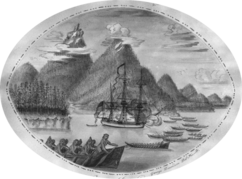
Painting of Columbia Rediviva by George Davidson, illustrator for Robert Gray’s second...
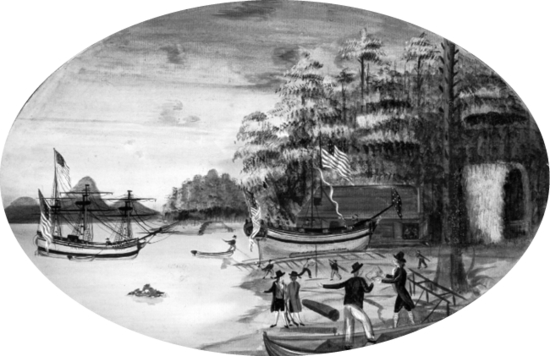
Winter quarters at Fort Defiance, Adventure Cove, Lemmens Inlet, Meares Island. In this sprightly watercolour by George Davidson, illustrator on Captain Gray’s voyage in the famed Boston ship Columbia Rediviva, the artist portrays himself showing off this very illustration. On the left, the Columbia is shown in Adventure Cove. On the stocks below Fort Defiance and the Stars and Stripes is the sloop Adventure, being built as a coaster for the sea otter business. The location of Fort Defiance was found after diligent searches by American and local historians. In 1966, Ken Gibson of Tofino established the exact site. Oregon Historical Society Research Library